Treatise on Money by Joseph Schumpeter
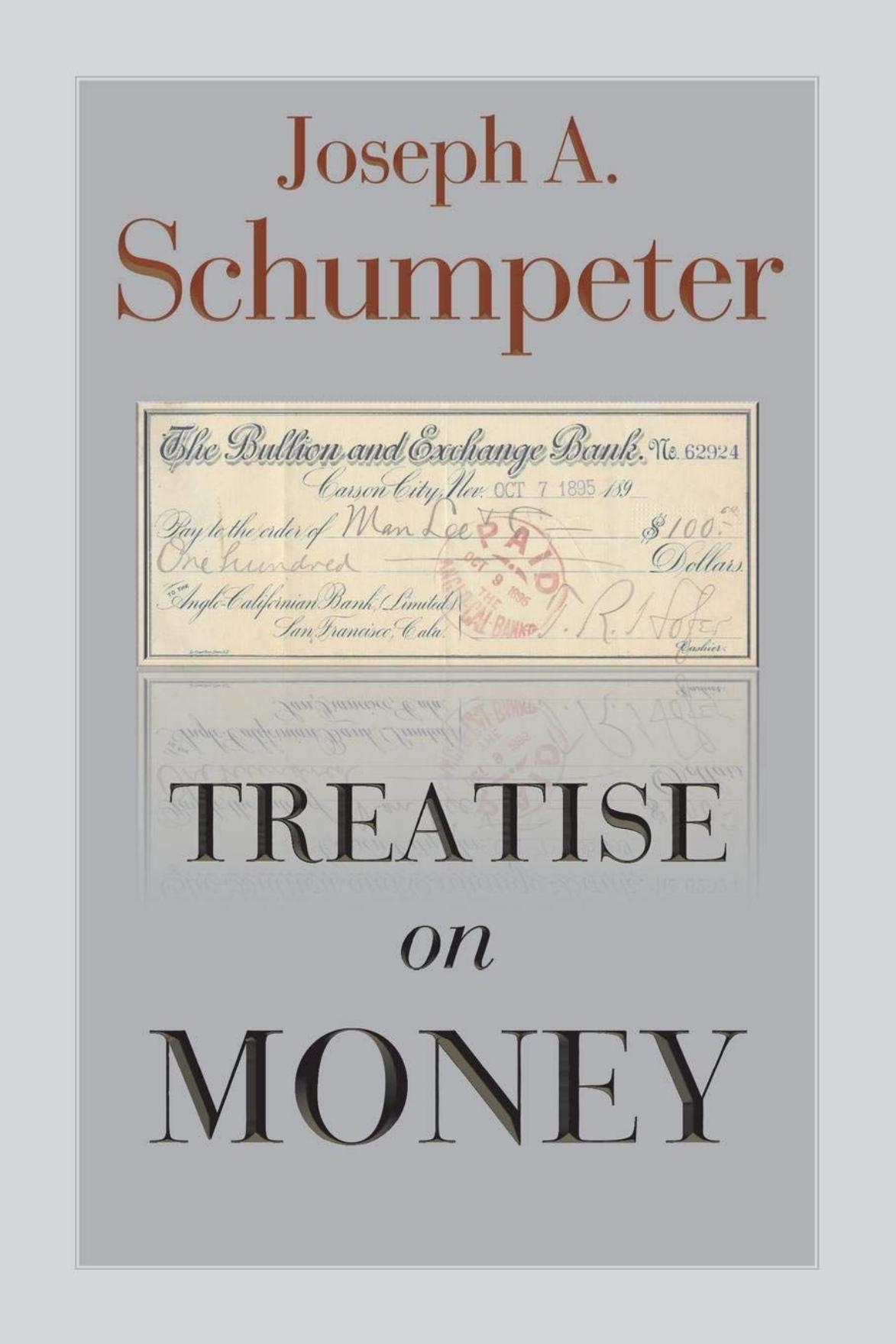
Author:Joseph Schumpeter [Schumpeter, Joseph]
Language: eng
Format: epub, pdf
Publisher: WordBridge Publishing
Published: 0101-01-01T00:00:00+00:00
6. In essence, the entire theory of the technique and economics of banking lies in the discussion of the ratios between – or the quotients of – the variables cash, reserve balances, loans, investments, checking balances of customers, investment funds of customers, and combinations (such as cash plus reserve balances, loans plus investments, etc.) or subdivisions (such as business and stock [200] market loans) thereof. So we can characterize the implemented considerations regarding the limits of credit and checking balance expansion as considerations regarding determinants of the bank quotients cash ÷ checking balance, and cash plus reserve balance ÷ checking balance. But this does not mean that one or the other [determines] the extent and rate of change [of credit creation].13
The principle of the matter is, however, easy to point out. Suppose that there is no central bank and every bank goes to work focusing on itself, and furthermore that all balances are checking balances [as opposed to investment balances], thus cash for their holders. As long as bank A under such circumstances neither provides credit nor makes investment in our sense, the ratio between its cash items and these borrowed funds must always be 1:1, disregarding the bank’s own means, and neither the one item nor the other can ever change other than by an equal amount the one with the other. This can only change, but then must also change, if the bank makes loans or invests. And such a process must depress the bank quotient cash ÷ balances below 1:1, so that its sinking below 1:1 always means the emergence of means of payment through the act of bank credit provision or investment. Sticking to our accounting method, bank A, which, for example, has received a million [marks] in original deposits, provides credit in the amount of half a million; in that case, cash on hand of one million (and half a million in granted loans or discounts) face checking balances in the amount of one and a half million, making our bank quotient equal to Å. If both original depositors and borrowers withdraw half of their checking balances, the item cash on hand will sink to 250,000, the item borrowed funds to 750,000, and the quotient to Ä. And yet, there has been no further “increase” in the means of payment circulating in the area of study, such as this decline might suggest – for the means of payment “created” by the action of the bank are now in circulation.
Download
This site does not store any files on its server. We only index and link to content provided by other sites. Please contact the content providers to delete copyright contents if any and email us, we'll remove relevant links or contents immediately.
International Integration of the Brazilian Economy by Elias C. Grivoyannis(111066)
The Radium Girls by Kate Moore(12033)
Turbulence by E. J. Noyes(8056)
Nudge - Improving Decisions about Health, Wealth, and Happiness by Thaler Sunstein(7711)
The Black Swan by Nassim Nicholas Taleb(7136)
Rich Dad Poor Dad by Robert T. Kiyosaki(6644)
Pioneering Portfolio Management by David F. Swensen(6303)
Man-made Catastrophes and Risk Information Concealment by Dmitry Chernov & Didier Sornette(6022)
Zero to One by Peter Thiel(5806)
Secrecy World by Jake Bernstein(4755)
Millionaire: The Philanderer, Gambler, and Duelist Who Invented Modern Finance by Janet Gleeson(4481)
The Age of Surveillance Capitalism by Shoshana Zuboff(4307)
Skin in the Game by Nassim Nicholas Taleb(4255)
The Money Culture by Michael Lewis(4211)
Bullshit Jobs by David Graeber(4195)
Skin in the Game: Hidden Asymmetries in Daily Life by Nassim Nicholas Taleb(4011)
The Dhandho Investor by Mohnish Pabrai(3773)
The Wisdom of Finance by Mihir Desai(3751)
Blockchain Basics by Daniel Drescher(3585)
